What Happens Inside Your Ear During Microsuction Wax Removal?
If you’ve ever had blocked ears, you know how frustrating it can be! Sounds feel distant, your own voice can seem louder than everything else, and there’s often that uncomfortable pressure you can’t quite ignore.
Microsuction ear wax removal is the safest and most precise way to deal with it. But what actually happens inside your ear during the process? What is your audiologist doing, and what should you expect to feel?
Let’s walk through it in a clear, practical way, so you get a closer look at what you’ll feel, hear, and experience.
First, a quick reminder: Why ear wax exists
Before anything is removed, it helps to understand what ear wax is doing there in the first place.
Ear wax, also known as cerumen, is not a problem by default. It protects your ear canal by trapping dust, bacteria, and debris. It also helps keep the skin inside your ear from drying out.
Most of the time, your ears clean themselves. Jaw movement from talking and chewing slowly moves wax outward, where it naturally falls away.
Problems start when that process is disrupted. This can happen if you:
- Use earbuds or headphones frequently
- Wear hearing aids
- Use cotton buds
- Produce more wax than average
- Have narrow or curved ear canals
When wax builds up, it can block sound from reaching the eardrum. That is when microsuction becomes necessary.
What your audiologist sees before starting
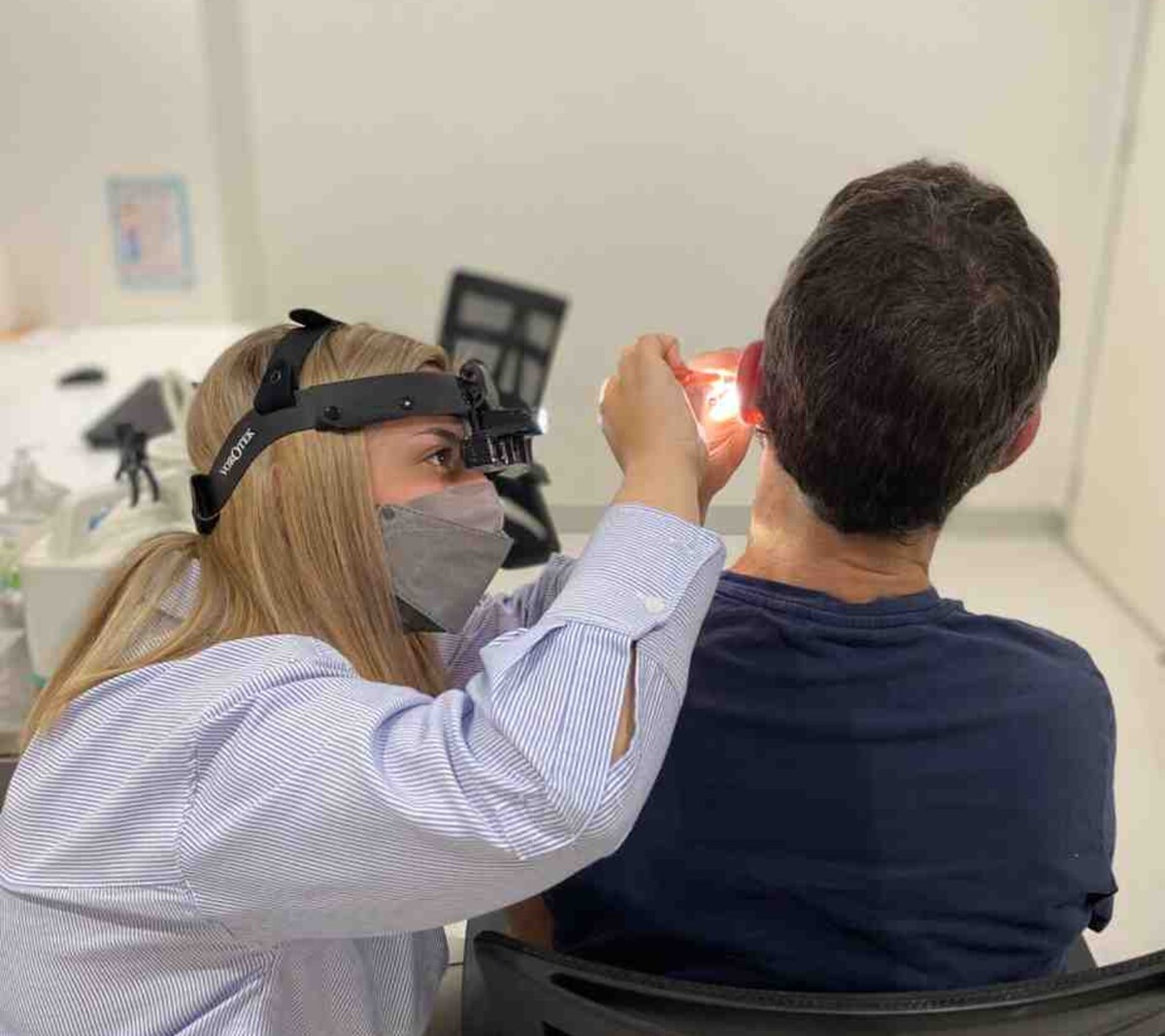
Before any removal begins, your audiologist takes a careful look inside your ear using a specialised microscope or video otoscope.
This step matters more than most people realise.
They are checking:
- How much wax is present
- Where it is sitting in the canal
- Whether it is soft, dry, or impacted
- The condition of your ear canal skin
- Whether your eardrum is visible
This assessment shapes the entire approach. No two ears are the same, and a good clinician adjusts technique based on what they see.
What is ear wax microsuction?
Microsuction uses a small, gentle suction device to remove wax under direct vision.
Unlike older methods such as syringing, there is no water involved. That means:
- No pressure build-up in the ear
- No risk of water being trapped
- Greater control and precision
Your audiologist works with a fine suction probe, guided by magnification and lighting, to carefully lift and remove wax piece by piece.
Step by step: what happens inside your ear
1. Positioning and access
You will usually sit upright in a chair. Your audiologist gently pulls your outer ear slightly upward and backward.
This straightens the ear canal, making it easier to see and work safely.
Inside your ear, nothing has changed yet. The wax is still sitting where it was, often partially blocking the pathway to your eardrum.
2. Introducing the suction probe
The suction device is then placed at the entrance of your ear canal.
It does not go straight to the eardrum. Instead, it approaches gradually, staying within a safe working distance.
Inside your ear, the probe is:
- Positioned carefully near the wax
- Kept under constant visual control
- Moved slowly and deliberately
You might hear a soft suction sound at this point. Some people describe it as a light vacuum or faint crackling noise.
3. Loosening and lifting the wax
This is where the real work happens.
Depending on the type of wax, your audiologist may:
- Gently suction loose pieces away
- Break larger pieces into smaller sections
- Use a fine instrument alongside suction if needed
Inside your ear canal, the wax is being lifted away from the skin. If it has been sitting there for a while, it may be slightly attached. That is why the process is slow and controlled.
You might feel:
- A slight pulling sensation
- Mild vibration
- Changes in pressure
None of this should be painful. If it is, your clinician will adjust immediately.
4. Clearing the pathway to the eardrum
As wax is removed, something important starts to happen.
Sound can travel more freely through your ear canal again.
Inside your ear:
- The blockage reduces
- The canal opens up
- The eardrum becomes visible
Many people notice an immediate shift in hearing, even before the procedure is finished.
5. Final inspection
Once the wax is cleared, your audiologist checks the ear again.
They are looking at:
- The condition of the ear canal
- Whether any wax remains
- The health of the eardrum
This step ensures nothing has been missed and that your ear is in good condition.
What it feels like from your side
Understandably, most people often worry about discomfort, especially if they have never had microsuction before.
Here is what most patients actually report:
- A strange but manageable noise
- Mild pulling or tickling sensations
- A sudden improvement in hearing
- Relief from pressure
The sound can be the most noticeable part. Because the ear canal is a small, enclosed space, even gentle suction can seem loud internally.
That said, it's a very quick and controlled process!
Why microsuction is considered the safest method for ear wax removal
Precision
There is a clear reason why many audiology clinics choose microsuction over traditional ear syringing. It gives the clinician far more control, and that directly improves safety and comfort for the patient.
The biggest advantage is visibility. Your audiologist works under magnification with a clear view inside the ear canal. They can see exactly where the wax is, how it is sitting, and how close it is to the eardrum. This removes guesswork and allows for a slow, precise approach tailored to your ear.
Dry procedure
Another key benefit is that no water is used. Syringing relies on flushing the ear with fluid, which can sometimes leave moisture behind. That trapped moisture may irritate the ear canal or increase the risk of infection. Microsuction avoids this completely, making it a cleaner and more controlled option.
Suitable for everyone
It is also suitable for a wider range of people. This includes those with perforated eardrums, a history of ear infections, hearing aid users, and anyone with sensitive ears. Both children and adults can be treated safely, with the approach adjusted to suit each individual ear.
When wax removal makes a noticeable difference
You might not realise how much wax has affected your hearing until it is gone.
Common improvements include:
- Clearer, sharper sound
- Reduced ear fullness
- Less echo when you speak
- Better performance from hearing aids or earphones
In some cases, people also notice reduced tinnitus symptoms once the blockage is removed.
A quick word on what not to do at home
It is tempting to try and fix blocked ears yourself, especially with cotton buds or home kits.
The problem is that these often push wax deeper into the ear rather than removing it.
This can:
- Make the blockage worse
- Increase the risk of impaction
- Irritate the ear canal
If your ears feel blocked, it is worth getting them checked properly instead of guessing.
How often should you have microsuction?
There is no one-size-fits-all answer.
Some people never need it. Others benefit from regular checks, especially if they:
- Wear hearing aids
- Use earplugs frequently
- Naturally produce more wax
A good approach is to monitor symptoms. If you notice changes in hearing, fullness, or discomfort, it is time to have your ears looked at.
What to expect after your appointment
Most people leave their appointment feeling immediate relief.
You might notice:
- Improved hearing straight away
- A lighter, clearer sensation in the ear
- No lingering discomfort
In rare cases, your ear may feel slightly sensitive for a short time, especially if the wax was impacted.
This usually settles quickly.
Clearer hearing starts with a proper check
If your ears feel blocked or your hearing has changed, it is worth getting it assessed properly rather than waiting it out.
At earLAB in Melbourne, microsuction ear wax removal is carried out with care, precision, and a focus on your long-term ear health. You will not be rushed, and every step is explained so you feel comfortable throughout.
You can book an appointment at our audiology clinics in Footscray or Richmond for a thorough check and safe microsuction earwax removal.
Sometimes the fix is simpler than you think. And the difference it makes can be immediate!

Lisa Wong
BHSc(Psych). DipNatHT. DipHDPE. CertAuralMicrosuction. AACAud
More Articles