Single-Sided Deafness: Why One Good Ear Isn’t the Same as Two

You’ve probably worked out your own system by now. You always take the left side of the footpath so your good ear faces your walking companion. At the pub, you claim the corner seat before anyone else sits down. In the car, you turn your head at odd angles just to catch what your passenger said about the turnoff. And when someone calls your name in a shopping centre, you spin in a full circle because you genuinely have no idea where the sound came from!
Welcome to life with single-sided deafness. Audiologists know it’s more common than most people realise, and the good news is that head-turning is nowhere near your only option these days.
What is single-sided deafness all about?
Single-sided deafness, sometimes shortened to SSD, describes significant or total hearing loss in one ear while the other ear hears normally or close to it. Audiologists also use the term unilateral hearing loss for milder versions of the same thing. This difference is surprisingly common, but remember that your ears are sisters, not twins.
Plenty of people arrive at it in different ways. Some are born with it. Others develop it after sudden sensorineural hearing loss, which is a genuine medical emergency and worth mentioning to your GP the same day it happens. Viral infections, Ménière's disease, acoustic neuroma, head trauma, mumps, meningitis and certain medications all sit on the list of possible causes. Sometimes nobody ever pins down a reason, which feels frustrating but does not change your options for managing it.
A common assumption is that one good ear should be plenty. After all, you can still hear. You still answer the phone, you still enjoy music, you still follow the footy commentary. So what is the fuss about?

Why one ear is harder work than it sounds
Your brain was built to work with two ears, and it uses the tiny differences between them constantly. Sound reaches one ear a fraction of a millisecond before the other, and slightly louder on the nearer side. Your brain crunches those differences without you ever noticing and tells you exactly where the sound came from. That’s localisation, and it disappears with SSD.
Then there is the head shadow effect. Your skull physically blocks sound, particularly higher pitches, from travelling around to the other side. So anything happening on your deaf side loses roughly 6-15 decibels by the time it reaches your working ear. Higher frequency sounds, the very ones that carry consonants like s, f, th and t, take the biggest hit. That’s why speech coming from your poor side often sounds present but mushy, like someone talking through a pillow.
You also lose binaural squelch, which is a wonderful term for the way two ears working together help your brain separate a voice from background racket. With one ear, a noisy restaurant becomes genuinely exhausting. You’re not imagining the fatigue. Listening effort goes up, and by mid-afternoon in an open plan office you feel wrung out.
Kids with SSD often face extra hurdles in classrooms, where noise and reverberation make single-ear listening tough. Adults notice it most at work meetings, family barbecues and anywhere with hard floors and high ceilings.
CROS: Routing sound around your head
Here is where things get clever. A CROS fitting stands for contralateral routing of signal, and it does exactly what the name suggests.
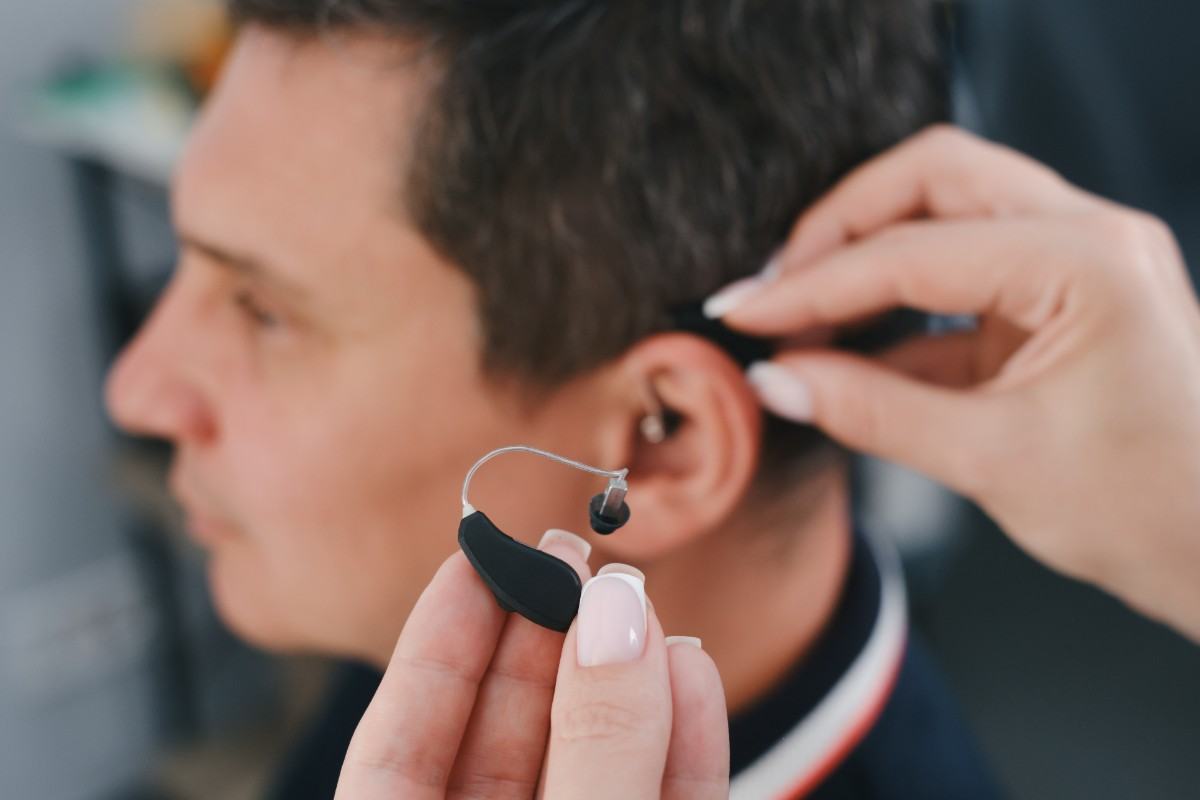
With a CROS , you wear two devices. On your deaf ear sits a small transmitter that looks just like a hearing aid but does not amplify anything into that ear. Instead it picks up sound and wirelessly sends it across to a receiver worn on your good ear. That receiver delivers the sound to the ear that can actually use it.
The result is that you stop missing conversations from your bad side. The passenger in your car becomes audible without gymnastics. Your colleague sitting on your deaf side at the meeting table no longer has to repeat themselves. It feels a bit strange for the first week or two while your brain adjusts, then most people forget they are wearing anything.
A CROS suits people whose good ear genuinely has normal or near-normal hearing. Nothing gets amplified in the good ear, so it keeps working naturally while gaining access to sound from the other side.
BiCROS: For when the good ear needs help too
Sometimes the better ear isn’t perfect either. Maybe you have profound loss on one side and a mild to moderate loss on the other, which happens often as we get older.
BiCROS handles that combination. The transmitter still sits on the poor ear and sends sound across, but the device on your better ear now does two jobs. It amplifies the sound arriving from your deaf side and it also amplifies what it picks up locally, tuned to your specific prescription.
So, you get the benefit of hearing from both sides plus proper support for the ear doing all the work. For a lot of people this makes a bigger day-to-day difference than either function on its own.
What CROS and BiCROS cannot do
Being straight with you matters here. Routing sound to your working ear does not restore true binaural hearing. Your brain still receives everything through one ear, so localisation stays limited. You will probably still turn your head to find a ringing phone.
Some people also find that in very noisy places, having sound from both sides funnelled into one ear feels cluttered rather than helpful. Modern devices handle this far better than older ones, with directional microphones and settings you can switch depending on where you are. Many now connect to your phone so you can adjust things discreetly, and streaming calls straight to your good ear is a genuine bonus.
The honest answer is that a trial period tells you more than any brochure. Wearing the devices through your actual week, at your actual job, in your actual local cafe, gives you real information.
Other paths worth knowing about
CROS and BiCROS are not the only routes you can take to manage SSD.
Bone conduction devices send sound through skull vibration to the inner ear on your good side, bypassing the outer and middle ear entirely. Some are surgically implanted, others sit on a softband or adhesive adapter, which makes them popular for children and for anyone wanting to try them out before committing.
Cochlear implants are the only option that restores hearing in the deaf ear itself rather than working around it. Australia has seen growing interest in implants for SSD, particularly where the loss is recent and the hearing nerve remains healthy. Candidacy depends on several factors, so a full hearing assessment comes first.
Remote microphones are brilliant and underrated. Clip one on the person you most need to hear, whether that is a lecturer, a client or your partner across a loud pub table, and their voice streams directly to your device. For anyone who struggles specifically in type of noise, this often delivers the single biggest improvement.
Practical adjustments still count too. Choosing your seat deliberately, cutting background noise where you can, and simply telling people which side to stand on removes a surprising amount of daily friction.

Getting a proper hearing assessment in Richmond or Footscray
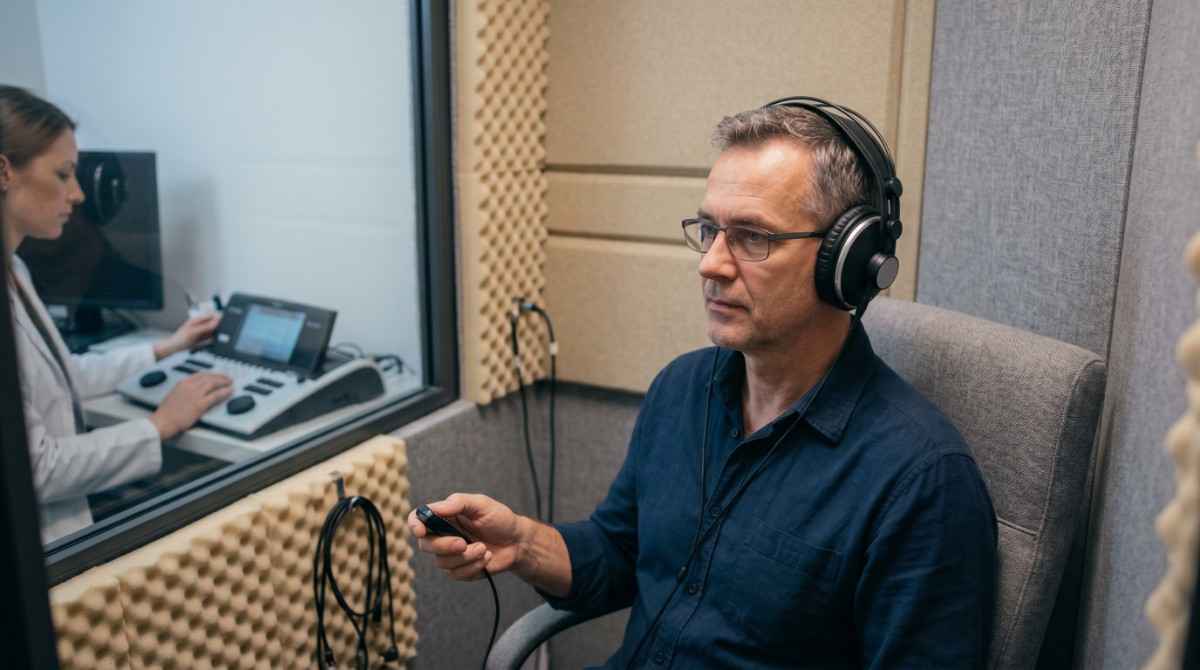
Working out which option fits you starts with knowing exactly what your hearing does now. A comprehensive assessment covers otoscopy, tympanometry, pure tone audiometry and speech-in-noise testing, which is the one that really shows how you cope in the real world rather than a quiet booth.
At earLAB, our clinics in Footscray and Richmond are independent and audiologist-led, which means we fit across brands rather than pushing one manufacturer or getting commission from sales. Since Oticon and Bernafon both offer strong CROS and BiCROS solutions, having genuine choice matters when your situation is a bit unusual.
We look after private clients, WorkCover clients and people accessing the Australian Government Hearing Services Program. You do not need a referral to be seen, though a GP or ENT referral may help with Medicare rebate eligibility. If you go on to purchase a hearing aid with us, the cost of your assessment (which is just $170) comes off the overall cost.
Same-day and next-day appointments are often available. Book online or give us a ring and let us find you something better than another awkward head turn.
FAQs
What’s the difference between CROS and BiCROS?
CROS suits people with one deaf ear and one normal ear. It routes sound across without amplifying your good side. BiCROS does the same routing but also amplifies your better ear, which helps if that side has a mild or moderate loss too. Our audiologists at Footscray and Richmond will work out which fits you. Book online today.
Will a CROS device give me back my sense of direction?
Not fully, and we would rather be upfront about that. Sound still arrives through one ear, so pinpointing where a noise came from stays tricky. What CROS does deliver is access to conversations from your deaf side, which most people rate as the bigger win. Come in to our Footscray or Richmond clinics and trial one to judge for yourself.
My hearing dropped suddenly in one ear. What should I do?
Treat it as urgent and contact your GP the same day, because sudden sensorineural hearing loss responds best to prompt treatment. Once that is underway, a full assessment maps exactly what has changed and what your options are. We often have same-day and next-day appointments at earLAB in Footscray or Richmond, so get in touch with us straight away.
How long does it take to adjust to a CROS fitting?
Most people need a week or two while the brain gets used to sound arriving from both sides through one ear. Early on it can feel busy, then it settles and you largely forget you are wearing anything. At earLAB, we schedule follow-ups to fine-tune along the way. Book your assessment online or call our Footscray or Richmond clinics.
Lisa Wong
BHSc(Psych). DipNatHT. DipHDPE. CertAuralMicrosuction. AACAud
More Articles