At What Level of Hearing Loss Do You Need a Hearing Aid?
Have you ever found yourself sitting at a noisy cafe, nodding along to a conversation while quietly hoping you're reacting appropriately? Perhaps you find yourself turning the television volume up just a few notches higher than you used to, much to the amusement of your family. If these scenarios sound familiar, you’re probably wondering if your hearing has changed and if you really need hearing aids or not.
It's a completely valid question! We tend to think of healthcare in very clear black-and-white terms. You have a specific temperature, so you take medicine. Your eyesight falls below a certain standard, so you get glasses. Hearing loss involves a much more nuanced approach. The decision to use a hearing aid depends on clinical numbers, detailed testing, and your daily life experiences.
Let's explore exactly what happens inside a modern audiology clinic, how we measure your hearing, what those specific numbers actually mean, and how to know when it's time to take action.
The First Step: Understanding Your World
A true comprehensive audiology test begins long before you put on a pair of headphones. When you visit an independent audiology clinic, the appointment starts with a detailed conversation to discuss the realities around hearing loss, your lifestyle, and what you’re concerned about.
Audiologists don't just treat ears. We treat people. Therefore, we need to understand how your hearing impacts your daily routine. We'll ask about your workplace, your hobbies, and your social life. We need to know if you spend your days in quiet offices, working with machinery, in bustling classrooms, or windy golf courses.
Two people can have the exact same hearing test results but experience entirely different challenges. A retired individual who spends most of their time reading at home might not feel the impact of a mild hearing loss. Conversely, a primary school teacher managing a noisy classroom will likely experience significant communication barriers and fatigue with that exact same level of hearing loss. Quality of life remains the most important metric.

Inside the Comprehensive Audiology Test
To make an accurate recommendation, we need a complete picture of your hearing health. A basic hearing screening, like the ones you might find online only scratches the surface, only checking if you can hear a few tones at a set volume.
A comprehensive audiology test goes much deeper. Your audiologist acts as an investigator. We use several different clinical tests to determine not just what you hear, but how your ears and your brain process those sounds.
Otoscopy: The Visual Inspection
Before we play any sounds, we look inside your ears using an instrument called an otoscope. We're checking the physical health of your ear canal and eardrum. We look for physical blockages like earwax buildup, signs of infection, or abnormalities. Sometimes, a hearing issue is completely temporary. Simply clearing a blockage of wax can restore normal hearing immediately.
Tympanometry: Testing the Mechanics
Next, we perform a quick and painless test called tympanometry. This measures how well your eardrum moves. We place a soft plug in your ear and gently change the air pressure. This helps us identify issues in the middle ear space behind the eardrum. If you have fluid buildup from a recent cold or a stiff eardrum, this test will reveal it. It tells us if the mechanical parts of your ear are working correctly.
Pure Tone Audiometry: Mapping Your Hearing
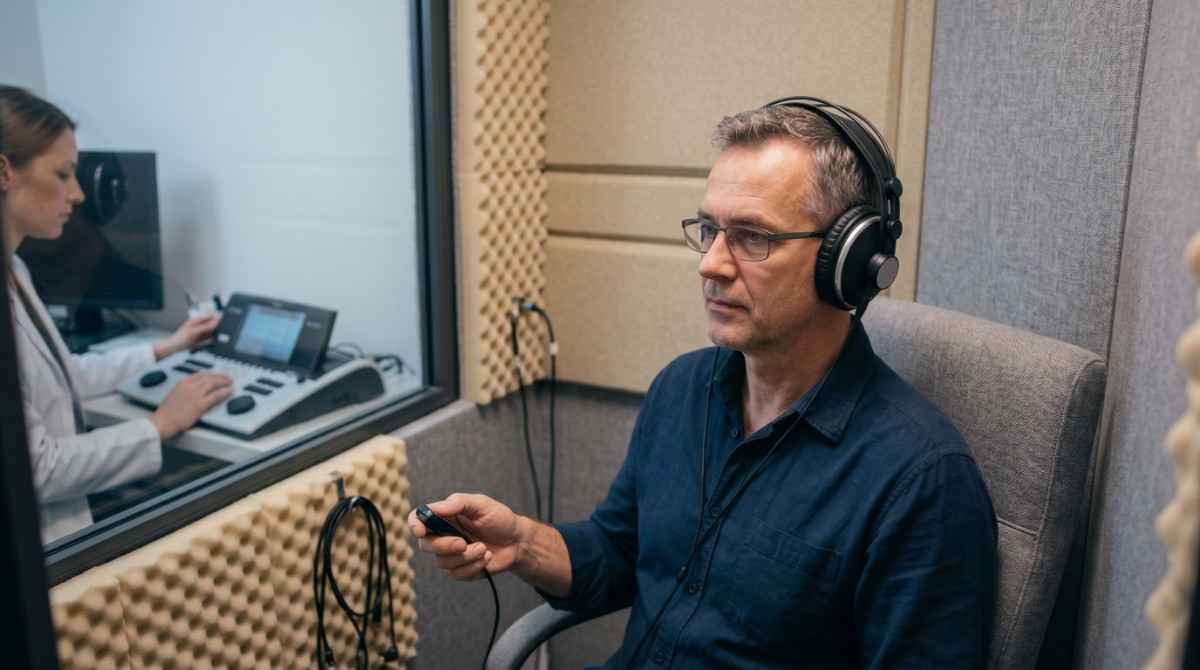
This is the part most people recognise. You sit in a soundproof booth and wear a set of specialised headphones. You press a button every time you hear a beep. This is known as air conduction testing. It tells us how sound travels through your entire auditory system, from the outer ear, through the middle ear, and into the inner ear.
We don't stop there. We also perform bone conduction testing. For this, we place a small vibrating headband behind your ear, resting directly on the mastoid bone. This bypasses the outer and middle ear entirely and sends sound vibrations directly to the inner ear and the hearing nerve.
By comparing the results of the headphone test and the bone conduction test, we can pinpoint exactly where the hearing loss occurs. If you hear perfectly through the bone but struggle with the headphones, we know the issue lies in the outer or middle ear. If the results match, we know the hearing loss originates in the inner ear or the auditory nerve.
Speech Audiometry: Real-World Simulation
Hearing a beep in a quiet room is one thing. Understanding human speech is another entirely! Speech testing helps us evaluate how well you understand spoken words at comfortable and challenging listening levels.
We'll ask you to repeat words back to us. First, we do this in quiet conditions to find your speech reception threshold, which is the softest level you can understand speech. Then, we introduce background noise. We simulate real-world environments like a busy restaurant or a crowded room.
This test is absolutely crucial. It tells us how effectively your brain interprets the complex signals it receives from your ears. Some people can hear sounds perfectly well but struggle to separate a single voice from background chatter. Speech testing reveals these hidden difficulties.
Decoding the Audiogram: What the Numbers Actually Mean
After the testing is complete, your audiologist will show you a graph called an audiogram. This visual representation of your hearing can look confusing at first glance, but it relies on two primary numbers: Hertz and Decibels.
Hertz: Measuring Pitch
Across the top of the audiogram, you'll see numbers ranging from 250 to 8000. These numbers represent Hertz, which is the measurement of pitch or frequency.
Think of a piano keyboard. The low numbers on the left side of the graph represent low-pitched sounds, like thunder, a bass drum, or the hum of a refrigerator. The high numbers on the right side represent high-pitched sounds, like birds chirping, a whistle, or the rustling of leaves.
Human speech covers a wide range of these frequencies. Vowel sounds, like 'o' and 'u', carry the volume of speech and sit in the lower frequencies. Consonant sounds, like 's', 'f', 'th', and 't', give speech its clarity and meaning. These consonants sit in the higher frequencies.
Decibels: Measuring Loudness
Down the side of the audiogram, you'll see numbers ranging from 0 to 120. These represent Decibels, which measure volume or loudness. Zero doesn't mean absolute silence. It simply represents the softest sound a healthy human ear can detect.
Normal breathing is around 10 decibels. A normal conversation sits at about 60 decibels. A lawnmower operates at around 90 decibels.
When we plot your test results on this graph, we mark the absolute softest volume you can hear at each different pitch.
The Levels of Hearing Loss
Understanding the intersection of pitch and volume helps explain why you might struggle in certain situations. Here's a practical breakdown of the different hearing loss categories and what they mean for your daily life.
Normal Hearing (0 to 20 decibels)
If your test results fall in this range across all pitches, you can easily hear quiet sounds. You shouldn't have any trouble following conversations in both quiet spaces and noisy environments. Your brain receives clear, complete auditory signals.
Mild Hearing Loss (21 to 40 decibels)
The clinical term "mild" is terribly misleading! While it sounds insignificant, mild hearing loss causes intense frustration.
People with mild hearing loss typically lose the ability to hear high-pitched sounds first. This means the vital consonant sounds disappear from speech. Words like "cat" and "hat" or "show" and "throw" become difficult to distinguish.
If you've got a mild hearing loss, you might hear one-on-one conversations perfectly well in a quiet living room. However, put yourself in a busy restaurant, and suddenly the background noise drowns out the quiet consonant sounds. You hear the volume of the vowels, but you miss the clarity of the consonants.
This is why people at this stage frequently feel like everyone around them is mumbling. This is the exact level where a hearing aid provides incredible relief by restoring those missing high-pitched sounds.
Moderate Hearing Loss (41 to 55 decibels)
At this stage, following conversations without visual cues becomes extremely challenging. You might struggle to hear someone calling from another room or have difficulty understanding speech over the telephone. You'll find yourself turning up the television significantly.
With moderate hearing loss, you're missing a large portion of normal speech sounds, even in quiet environments. People with moderate hearing loss find that a well-fitted hearing aid is no longer just helpful; it becomes an essential tool for daily communication.
Moderately Severe to Severe Hearing Loss (56 to 90 decibels)
If your hearing falls into these categories, group conversations are incredibly difficult without amplification. You might only hear loud environmental sounds, like a dog barking nearby or a vacuum cleaner running. You'll rely heavily on lip-reading and visual context to understand what people are saying. Hearing aids are critical at this level to maintain connections and stay engaged with the world around you.
Profound Hearing Loss (91 decibels and above)
People with profound hearing loss may only hear very loud sounds, such as an aeroplane engine or a fire alarm close by. At this stage, powerful hearing aids or cochlear implants become necessary to access sound.
What Happens if You Leave Hearing Loss Untreated?
Choosing to put off addressing your hearing health carries consequences beyond just asking people to repeat themselves. High-quality research over the past decade demonstrates a strong link between untreated hearing loss and broader health issues.
When you struggle to hear those missing consonant sounds, your brain has to work incredibly hard to fill in the blanks. You spend your day constantly decoding incomplete messages. This constant effort leads to cognitive overload, often referred to as "listening fatigue." By the end of a social gathering or a workday, you might feel completely drained simply from trying to follow conversations.
When you struggle to hear, your brain works overtime to guess missing words. This heavy cognitive load drains energy from your working memory, making it noticeably harder to recall everyday details. Understandably, people often experience this forgetfulness and begin to worry that they are developing early memory loss. However, the concern is highly valid! Expert research has established strong link between untreated hearing loss and an increased risk of dementia. Because your brain is constantly strained and lacks vital auditory stimulation, cognitive decline can accelerate. Taking action early directly protects your long term brain health, which is why we actually recommend a comprehensive hearing test from age 45!
Furthermore, the frustration of struggling to communicate often leads people to withdraw from social situations. You might decline dinner invitations or avoid family gatherings because participating is just too difficult. This social isolation can contribute to feelings of loneliness and negatively impact your mental health. Taking care of your hearing is a proactive step in protecting your overall well-being.

Finding the Answers and the Right Solution at an Independent Clinic
Once we've completed the comprehensive audiology test and thoroughly explained what your specific numbers mean, we discuss your options. As an independent audiology clinic, our primary focus is finding the perfect solution for your specific clinical needs, lifestyle, and budget.
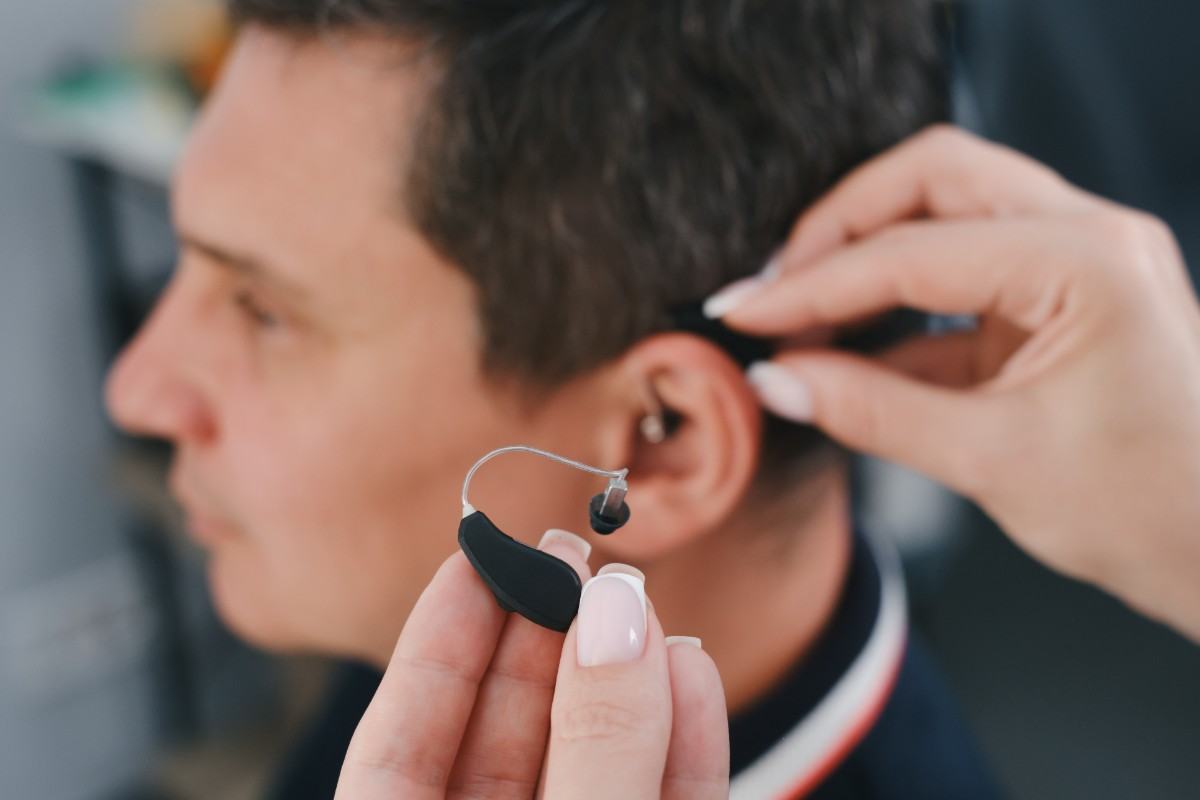
We aren't locked into selling a single brand of hearing aid. We have the freedom to recommend the best technology available on the market, helping prevent the issue of artificial sound and discomfort. We work closely with several of the world’s leading hearing aid manufacturers, including Oticon, Bernafon, and Starkey.
We might recommend Oticon for clients who prefer a highly natural soundscape. Oticon's Brain Hearing philosophy focuses on providing the brain with access to all meaningful surrounding sounds rather than artificially cutting off background noise. This works wonderfully for clients who find traditional hearing aids sound artificial.
We often recommend Bernafon for clients whose primary struggle is speech-in-noise clarity. Sharing a microchip platform with Oticon, their devices excel at preserving the speech signal in challenging environments, delivering excellent value and performance.
For clients looking for highly customised fits and integrated health tracking features, Starkey provides fantastic, innovative solutions. And because we're independent, we match the technology to your audiogram results and your lifestyle needs, rather than trying to fit your needs into a single product line.
Start at a Leading Audiology Clinic in Melbourne
Deciding when to get a hearing aid is a highly personal decision. There's no single magic decibel number on a chart that dictates exactly when you must start wearing one. It comes down to understanding your test results and acknowledging how your hearing loss affects your daily life, your relationships, and your energy levels.
If you find yourself avoiding social situations, feeling exhausted from listening, or struggling to hear clearly in noisy environments, it's time to have a conversation with a professional.
Book a comprehensive audiology test at our audiology clinic in Footscray or Richmond to establish a baseline for your hearing health. Let's guide you through the testing process, explain the numbers clearly, and help you find a solution that fits seamlessly into your life. As an independent clinic, you’ll have access to a wide range of leading hearing aid brands, along with guidance that helps you make confident decisions.
We also support multiple funding pathways, including private options, WorkCover, and the Australian Government Hearing Services Program, making the process simpler and more accessible.
Book your appointment at our clinics in Footscray or Richmond today!
FAQs
How do I know if I actually need a hearing test?
If you frequently ask people to repeat themselves or struggle to follow conversations in noisy places, a clinical hearing test is a smart idea. Listening fatigue is a major sign you should act. Our services pinpoint exact issues quickly and accurately. Book a comprehensive hearing test with our clinic in Richmond or Footscray today to understand your hearing better.
What happens during a clinical or comprehensive hearing assessment?
A clinical assessment involves far more than a simple beep test. We examine your physical ear health, test middle ear function, and carefully measure your ability to understand speech in background noise. Our services provide a complete picture of your ear health. Contact us to find out more and schedule your appointment in Richmond or Footscray.
What does mild hearing loss really mean?
Mild hearing loss makes soft sounds difficult to pick up. You might regularly miss consonants making speech sound muffled and unclear. This causes significant frustration in busy social environments. Our services help you manage this effectively. Book a hearing test today at our Footscray or Richmond clinics to explore your options and regain clarity in conversation.
At what point do I need to get hearing aids?
You benefit from hearing aids when untreated hearing loss starts impacting your daily life and social interactions. This often happens during the mild to moderate stages of hearing decline. Our services expertly match you with the right support. Book an appointment with us to discover if hearing technology is right for you.
How long does a full clinical hearing test take?
A thorough clinical assessment usually takes about an hour to complete. This allows plenty of time to check your ear health, run detailed diagnostic tests, and discuss your results clearly. Our services ensure you never feel rushed during your visit. Find out more about our process and book your comprehensive hearing test today.
Lisa Wong
BHSc(Psych). DipNatHT. DipHDPE. CertAuralMicrosuction. AACAud
More Articles