What Are The Risks of Microsuction Ear Cleaning?

The first time someone sits in the chair for microsuction, the same question tends to come up just before the clinician picks up the suction tip: "Is this going to hurt?" It's a fair thing to ask. A small vacuum is about to go into one of the most sensitive parts of the body, a few millimetres from the eardrum. So, here’s some insight from our audiology clinic on the risks of microsuction, how it works, and who performs it.
Why microsuction is considered the gold standard for earwax removal
Ask a group of hearing health professionals how they'd prefer to have their own ears cleared and most will say microsuction. That preference comes from experience. It's a clean, precise method, and the person doing it can see exactly what's happening the whole time.
The clinician can see everything
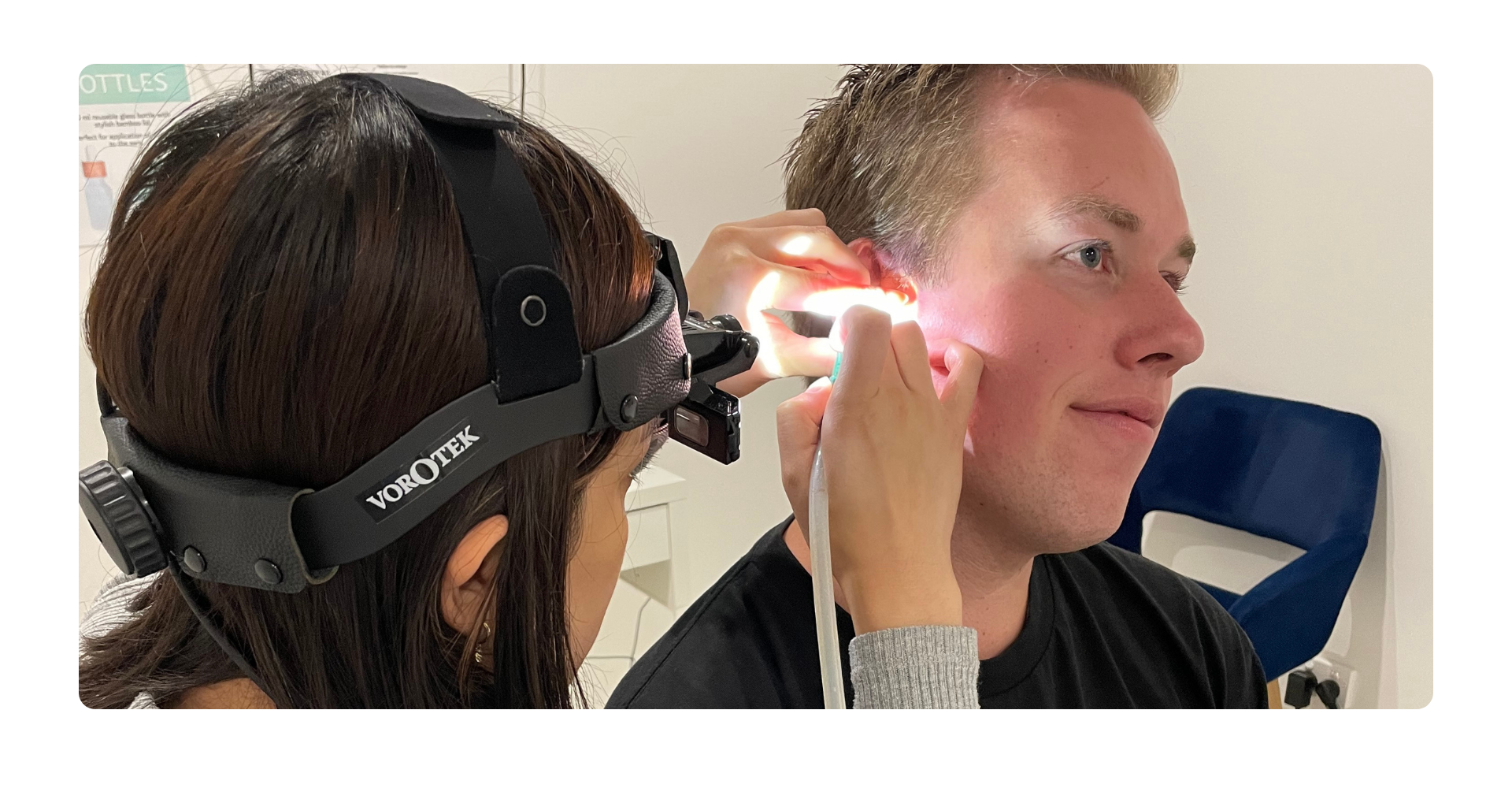
Older methods such as syringing worked largely blind. Water went into the ear, and everyone hoped the wax came out with it. Microsuction is done under direct magnification, usually with a binocular microscope, surgical loupes or a video otoscope. The audiologist watches the ear canal and eardrum throughout, so they can tell hard wax from soft, spot a narrow or curved canal, and stop the moment something doesn't look right.
It's a dry procedure
No water goes into the ear. That makes microsuction a safer option for people who can't have water in their ears (which happens in syringing), including those with:
- A current or past perforated eardrum
- Grommets (ventilation tubes), common in children
- Previous ear surgery
- A history of outer ear infections such as swimmer's ear
- A mastoid cavity
Keeping the canal dry also lowers the chance of infection afterwards. In Melbourne's humid stretches and during swimming season, that matters.
It works quickly and you can see the result
Most appointments take 15 to 30 minutes. Clients usually notice the difference straight away, and many describe it as the world being "switched back on". Wax that has been softened beforehand often comes out in just one visit! Hard, compacted wax may need a second appointment.
Clinical guidance supports it
The UK's National Institute for Health and Care Excellence (NICE) lists microsuction as a recommended removal method, and it's widely used across Australian audiology and ENT clinics. Professional guidance also discourages manual syringing because it carries a higher risk of eardrum damage or infection.
What are the risks and side effects?
Every medical procedure carries some risk, and microsuction is no exception. A 2020 study by Radford and colleagues, published in an open-access journal, found the most commonly reported symptoms were dizziness, the loudness of the procedure and temporarily reduced hearing. Most side effects are mild and short-lived. Here's what people can realistically expect.
Dizziness and the caloric effect
Some people feel briefly dizzy, light-headed or off-balance during or just after the procedure. Clinicians call this the caloric effect.
Airflow from the suction cools the ear canal, and because the canal sits so close to the balance organs of the inner ear, that temperature change can trigger a short spell of dizziness or vertigo. It usually settles within seconds or minutes.
Clinicians often pause, let the person sit for a moment and only continue once they feel steady. Anyone who feels woozy afterwards should sit quietly for a few minutes before driving.
Noise
The suction tip works right next to the eardrum, so it can seem a little loud. People describe it as whooshing, crackling or a high-pitched hiss. It's uncomfortable rather than harmful for most people, and some people even find the experience surprisingly satisfying! Anyone with hyperacusis (unusual sensitivity to everyday sounds) should mention it before starting, so the clinician can work in shorter bursts.
Minor injury to the ear canal skin
The skin lining the ear canal is very thin and delicate, especially near the eardrum. The suction tip can occasionally graze it, causing a small scratch or a spot of bleeding. ENT UK's guidance puts trauma to the canal skin at roughly 1 in 20 procedures. That figure sounds high until you realise it mostly covers minor abrasions that heal on their own within days. The risk climbs when the wax is rock-hard, the canal is inflamed or the person moves suddenly.
Temporary hearing changes and tinnitus
Some people notice muffled hearing or a temporary rise in tinnitus (ringing or buzzing in the ears) after the procedure. For many people with existing tinnitus, clearing a blockage actually makes the ringing less noticeable. A small number notice a short-term flare instead. It's usually temporary, but it's worth raising with the clinician beforehand.
Rare complications
Infection and damage to the eardrum, including perforation, are possible but rare when a trained audiology specialist does the work. This is where the experience of the person holding the suction tip really matters. People can reasonably ask a clinic about the clinician's training and how many procedures they perform.
How an experienced audiologist performs microsuction
Knowing what happens in the room takes much of the nerves out of it. Here's how a typical appointment runs.
1. A quick chat about your history
The audiologist asks about symptoms, past ear problems, surgery, infections, dizziness and any medications, including blood thinners. They'll also ask whether you wear hearing aids or earbuds every day. This shapes how they approach your ears.
2. A look inside before anything starts
Using an otoscope or video otoscope, the audiologist checks both ears. They assess how much wax is there, how hard it is, and the shape of the canal. With a video otoscope you can often watch on the screen too, which many clients find reassuring. If there's no wax worth removing, a good clinician will say so and won't go ahead.
3. Getting you comfortable
You'll sit or lie back in a reclining chair with your head turned to one side. The audiologist explains the sounds you'll hear. Suction is loud because it's working right next to your eardrum, so expect a hissing or crackling noise. You can raise a hand to pause at any time.
4. Removing the wax
Looking through magnification, the audiologist guides a fine, sterile suction tip into the outer part of the ear canal. The tip doesn't need to touch the skin and doesn't go near the eardrum. They gently lift the wax away bit by bit, adjusting the suction pressure and changing tip size as they go. For stubborn pieces, they might use a tiny curette or forceps to loosen the wax before suctioning it out.
An experienced clinician works in short bursts, especially around the sensitive inner section of the canal, and checks in with you often. This careful pacing is the main reason dizziness and discomfort stay rare.
5. Checking the result
Once the canal is clear, the audiologist examines the eardrum to confirm it's healthy and intact. If you wear hearing aids, this is a good moment to check how they fit or take new ear impressions.
Can you do microsuction ear wax removal for children?
Parents often ask whether microsuction suits children. There's no universal minimum age in clinical guidance, and some specialist clinics treat much younger kids. In practice, the deciding factor is whether the child can stay still.
That's why many clinics, ours included, offer microsuction for children aged 10 and up. By that age, most children can sit calmly for a few minutes, follow instructions and tolerate the noise. A parent or guardian can usually stay in the room. A sudden jerk of the head is the biggest risk in any child's procedure, so cooperation matters more than anything.

Speak to an audiologist in Footscray or Richmond
Safe microsuction comes down to experience, a clear view and a clinician who takes their time. At earLAB, you get all three. We check both ears thoroughly, explain what we find and keep you comfortable from start to finish.
Book at our Footscray or Richmond clinic soon. Plenty of people walk out amazed at how much clearer everything sounds and wonder why they waited so long!
FAQs
Do I need a GP referral for microsuction ear cleaning?
In most cases, no. You can book straight in with our audiology clinic in Footscray or Richmond. A referral can still help if you've had ear surgery, frequent infections or a perforated eardrum, because your audiologist gets the full picture before they start. If our audiologists spot something unexpected during your appointment, such as signs of infection or an unusual growth, they'll refer you to your GP or an ENT specialist.
Will Medicare or my private health insurance cover microsuction ear wax removal?
Microsuction appointments at earLAB in Footscray or Richmond aren't covered by Medicare. Some private health extras policies may pay part of the cost, so check with your fund before you book. All prices include GST where applicable and cover treatment of both ears, whether you have wax in one ear or both. If your clinician asks you to come back for a second follow-up appointment, that visit is free.
Can I have microsuction if I think I have an ear infection?
No. If your ear is painful, swollen, weeping or smells unusual, the canal skin is likely inflamed and more prone to bleeding and discomfort. Your audiologist will usually suggest you see your GP first, as an infection may need treatment. Once things have settled, which is often a week or two later, you can book an ear cleaning appointment and the wax can be removed safely and comfortably.
Can I swim, fly or use earbuds after microsuction ear cleaning?
Most people can carry on as normal the same day. If your audiologist sees a small graze or the canal looks a bit irritated, they may ask you to keep water out of that ear for a few days and leave earbuds or hearing aid domes out for a short while. Flying is generally fine, and a clear ear canal can make pressure changes easier to manage.

Lisa Wong
BHSc(Psych). DipNatHT. DipHDPE. CertAuralMicrosuction. AACAud
More Articles